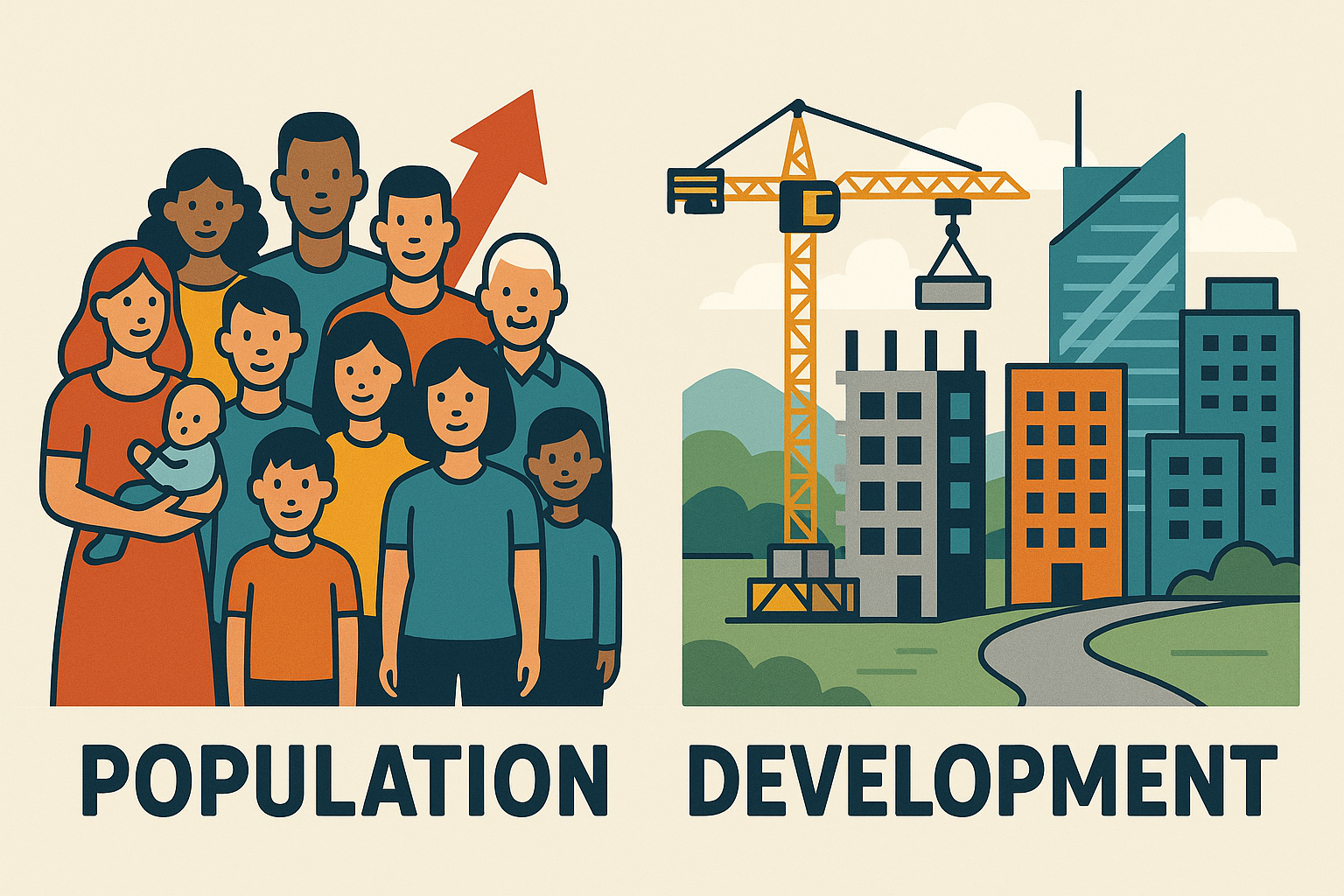
I. Impact of Population Growth on Social Indicators
Rapid population growth in Pakistan places significant strain on essential resources and public services, negatively affecting various social indicators.
A. Education Levels
Population expansion directly impacts the quality and accessibility of education:
- Overcrowded classrooms: A high number of students per class hinders effective learning.
- Shortage of qualified teachers: The demand for educators outpaces the supply of trained professionals.
- Insufficient educational infrastructure: There's a lack of adequate schools and learning facilities to accommodate the growing student body.
- Lower quality of education and reduced access: Ultimately, this leads to a decline in educational standards and limits opportunities for children to attend school.
B. Health Levels
The healthcare system faces immense pressure due to population growth, leading to:
- Increased demand for healthcare services: More people require medical attention, stretching existing resources.
- Overburdened hospitals: This results in "longer waiting times and less personal care."
- Shortage of medical professionals: There's a deficit of "doctors and nurses."
- Limited access to essential medicines and facilities: Basic healthcare provisions become scarce.
- Negative public health outcomes: The cumulative effect is a decline in the overall health of the population.
C. Nutrition Levels
A larger population necessitates a greater food supply, and if unmet, it can result in:
- Food insecurity: Not everyone has "reliable access to enough food."
- Malnutrition: This can lead to a "decline in the nutritional status of the population, especially for vulnerable groups like children and mothers."
II. Main Causes of Population Movements (Migration)
Population movements in Pakistan are driven by a combination of "push and pull factors." Push factors compel people to leave an area, while pull factors attract them to a new one.
A. Rural-Urban Migration
This is the movement of people from rural areas to urban centers.
- Push factors from rural areas: These include "limited economic opportunities, a lack of basic services such as education and healthcare, natural disasters, or insecurity."
- Pull factors in urban areas: People are drawn by "the perception of better job prospects, access to superior educational institutions, better healthcare facilities, and a wider range of services and amenities."
B. Seasonal Migration
This type of migration is temporary and often linked to specific work opportunities.
- Push factors: The primary driver is "the lack of year-round employment in their home regions."
- Pull factors: The main attraction is "the availability of seasonal labor, such as work in harvesting or construction, in other areas."
C. Emigration
This refers to people permanently leaving Pakistan for another country.
- Push factors from Pakistan: These frequently include "political instability, economic hardship, lack of opportunities, persecution, or conflict within the country."
- Pull factors in destination countries: These can be "the prospects of better economic opportunities, higher wages, political stability, a better quality of life, access to advanced education or healthcare, or opportunities for family reunification."
D. Immigration
This involves people coming to live permanently in Pakistan from a foreign country.
- Push factors from original countries: Generally, these are similar factors that drive emigration from their homelands.
- Pull factors for Pakistan: As a host country, Pakistan often attracts immigrants due to "the need for labor, specific skills shortages, or humanitarian considerations."
Conclusion: Understanding the dynamics of population growth and movement is "fundamental to grasping the challenges and opportunities for Pakistan's development